





The Rise of AI in Property & Real Estate


Over the last few years, AI has graduated from a futuristic technology to a pressing need across various industries. The property management business is also not immune to the AI’s influence.
For Besser & Co, AI is crucial for staying ahead of the competition. Here, we explain how the use of artificial intelligence in the real estate business is streamlining operations and also saving time and costs in the property business as compared to traditional approaches.
AI Tools for Property Managers
 The range of AI tools is impressive, and their use in AI property management is growing rapidly. These tools fall into a few key categories worth understanding.
Automated Communication & Chatbots
These AI-powered chatbots are very helpful when it comes to handling routine questions pertaining to lease terms, maintenance requests, property availability, etc. And they can answer you 24/7, leaving property managers to focus on stuff that actually needs a human touch instead of answering the same questions repeatedly.
Predictive Analytics Platforms
These systems use large volumes of data to forecast rental demand, price changes, and market trends. For any property management company trying to make smart calls, predictive analytics means decisions based on actual data rather than gut feeling. Experience still matters, but having solid numbers behind you is much better.
Maintenance Automation
Here is where AI real estate technology becomes especially useful. These systems can monitor smart sensors and resident reports to identify maintenance issues before they escalate into costly problems. Instead of waiting for damage to occur and then dealing with an emergency repair that costs a lot, maintenance automation is much more cost-effective.
Document Automation & AI Assistants
AI can help knock out, review, and organise documents – from lease agreements to compliance paperwork. Natural language processing systems pull out key details and flag inconsistencies. Anyone who has spent hours in paperwork knows this is a game-changer. These tools transform AI property management from reactive administration into a proper strategy.
Benefits of AI in Property Management
You don’t need a crystal ball to see the value that artificial intelligence in the property business brings. Here are the biggest wins any property management company should keep an eye on.
Efficiency and Time Savings
AI excels at repetitive tasks. Property managers are saving hours every week by using AI to schedule inspections, send reminders to tenants, and generate reports. This time, they can spend more productively building stronger client relationships instead of being buried in administrative paperwork.
Decision Making through Data
AI systems can analyse huge datasets much, much faster than it can be done manually. Thus, AI’s application in the real estate business can lead to smarter, ,more cost-effective and quicker decisions on rental pricing, investment opportunities, and risk management, among others. Algorithms can work out the best possible rental rates based on historical data, seasonal patterns, and what is happening locally. It is like having an entire research team working around the clock at the back-end.
Improved Tenant Experience
Quicker responses, personalised communication, and staying on top of maintenance – all these can lead to happier tenants, and happy tenants stick around. AI in real estate helps you anticipate tenants’ needs. That is what separates the top property managers from the rest of the pack.
Cost Reductions
Predictive maintenance by AI can bring cost savings in the long-run for the property owners. By spotting problems or potential problems early, AI can help the property owner to escape from emergency repairs later, which generally involve high costs. This, in turn, can also reduce the tenant turnover. In a competitive market, these savings really matter.
AI vs Traditional Property Management
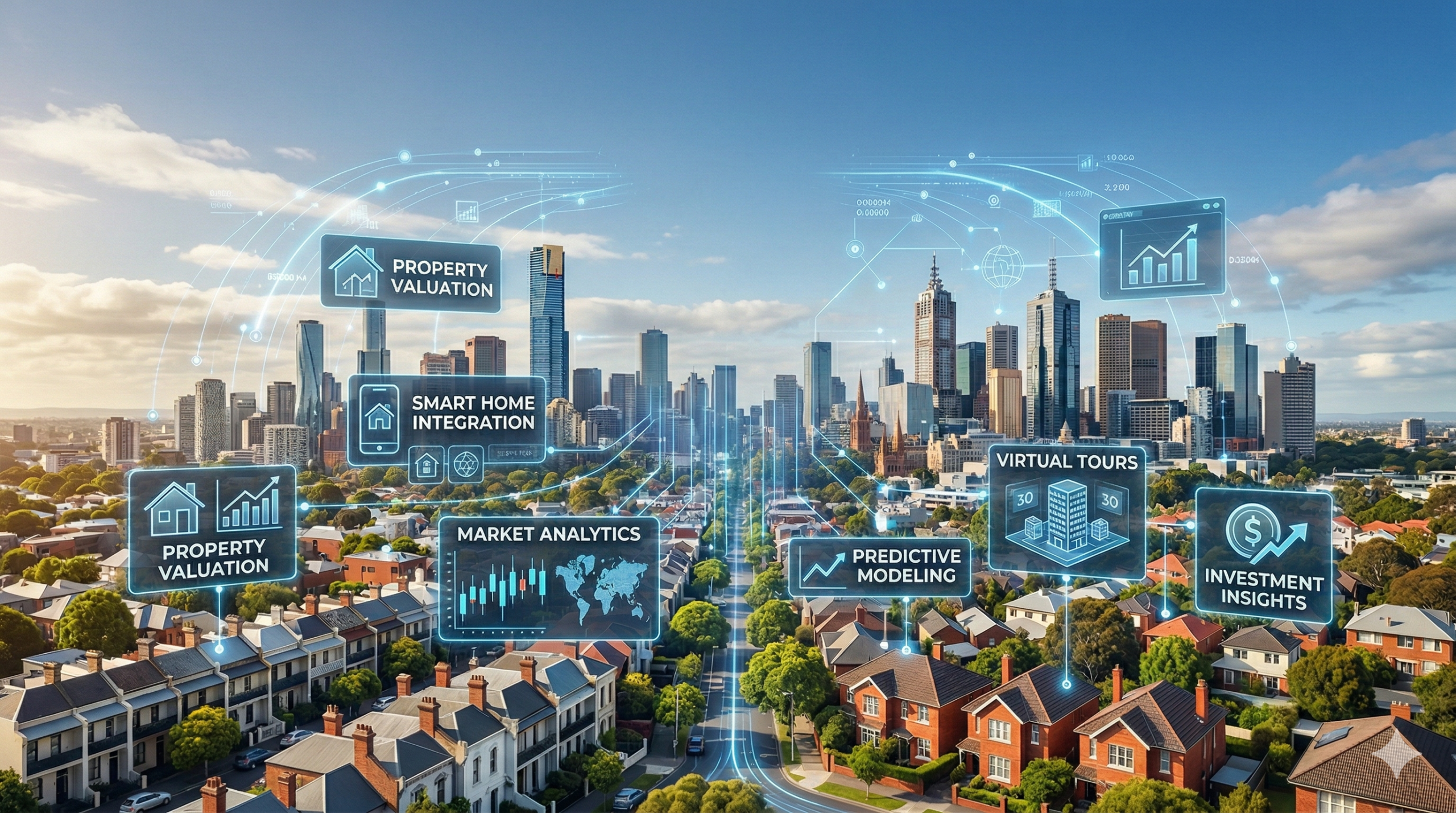
AI keeps tabs on regulatory changes, flags compliance issues, and helps you manage legal risks. This is of great importance to any property management company handling multiple properties with different rules and regulations.
The difference between AI-driven and traditional approaches isn’t about replacing people with robots – it is about making everyone’s job easier.
Traditional property management leans heavily on manual routine tasks – answering phones, processing applications, tracking data, etc. These are time-consuming and could lead to human errors. AI property management flips this by automating boring stuff while people can focus on relationships, problem-solving, and oversight – things needing human judgment.
Communication becomes instant and automated. Pricing shifts from pure experience to data-backed decisions. Documents get AI assistance. Maintenance becomes predictive. Tenant screening gets automated risk scoring. Scalability improves dramatically. Bottom line? AI real estate technology doesn’t replace expertise – it amplifies it.
AI for Tenant Screening
Tenant screening is critical and tricky. Traditional screening means credit checks, employment verification, and rental history – sometimes with gut feeling.
Artificial intelligence in the property business improves outcomes by automating background checks through credit bureaus and public records, creating smarter risk scores that consider payment history and job stability, reducing bias through diverse datasets (while staying compliant with anti-discrimination laws), and spotting suspicious applications by identifying patterns people might miss.
AI Real Estate Trends
One of the applications of AI in the real estate business is seen in buildings getting integrated with the Internet of Things, which is making smart sensors for power, security, and climate control a welcome reality.
Virtual and augmented reality can enable potential tenants to take property tours from anywhere in the world, which is ideal for high-end properties and long-distance renters. Blockchain, when paired with AI, can automate lease signing and payment tracking through smart contracts.
AI models are getting better at analysing specific local data – neighbourhood trends, demand changes – and delivering accurate predictions for pricing and investment. These trends clearly show that AI in real estate technology isn’t a passing trend – it is driving real, long-term change.
AI in Property Marketing
Personalising property listings, showing different features of property to different people based on their preferences, can be done through the application of AI tools.
AI can even write property descriptions and email campaigns, saving significant time. And since not all leads are worth chasing, AI ranks potential tenants or buyers based on their engagement and likelihood of follow-through.
Future of AI in Real Estate
In predicting market changes, pricing shifts, and tenant behaviour, the role of AI will continue to grow. AI-powered self-service portals, instant maintenance reporting, and real-time communication are expected to be welcome realities for tenants.
Final Thoughts
Artificial intelligence in the property business isn’t the future anymore – it is already here. For companies like Besser & Co, thoughtful use of AI can lead to smarter decisions, an increase in efficiency, a reduction of costs and improved tenant satisfaction.
The trick isn’t grabbing every tool you can find – it is picking the right ones that actually fit what you are trying to achieve and what your clients expect. If you are serious about staying ahead, it is time to move beyond spreadsheets and legacy systems.
AI gives you the power to do more, do it smarter, and do it faster, and that is something any smart property professional should definitely think about as we shape the future of real estate together.
FAQs
Can AI manage rental properties?
Many financial and non financial aspects of rental properties including tenant screening, maintenance scheduling, rent price, rent collection tracking, maintenance tracking, and communication can be managed by AI. However, application of AI in real estate should be by supplemented by experienced human resources who can bring judgment, interpersonal relationships and strategic planning to the table.
How is AI used in real estate?
Tenant screening, maintenance prediction, market analysis, and property marketing can be automated by AI. Chatbot inquiries, analyses of pricing data, personalising listings, and facilitating the optimisation of advertising campaigns are some of the other roles of AI in real estate.
Is AI replacing real estate agents?
AI can automate administrative tasks, but till date, it hasn’t been able to replace certain human attributes, such as negotiation skills, local knowledge, and relationship-building that expert real estate agents can provide.
AI tools make real estate agents more efficient by giving them more time to focus on high-value client interactions and strategic advice, while taking care of mundane and repetitive tasks.
What is AI in property and real estate?
Chatbots, predictive analytics, automated screening systems, maintenance monitoring, marketing optimisation, and document processing are examples of AI in real estate.
How is AI changing the real estate industry?
AI is significantly contributing towards making the real estate business more efficient, data-focused, and tenant-centric through predictive maintenance, data-driven pricing, automated communications, faster tenant screening, and personalised marketing.
What AI tools are used in property management?
Some of the AI tools used in today’s property management are chatbots, predictive analytics platforms for pricing, maintenance automation systems, document processing software, and tenant screening algorithms.
Can AI replace property managers or real estate agents?
AI can handle repetitive and mundane tasks with much more efficiency than human beings but as of now it can’t replicate certain human attributes such as judgment, empathy, negotiation and relationship-building skills. Thus as of now, AI cannot replace an expert property manager or real estate agent but can greatly enhance his/her efficiency.
How AI helps in tenant screening?
AI can facilitate tenant screening by automating background checks, analysing multiple data points such as credit history, employment, rental behaviour, etc. while improving accuracy and consistency in tenant selection decisions.
Is AI used for property valuations?
AI can be used effectively to facilitate property valuations. AI analyses location data, property features, comparable sales, market trends, and economic indicators to provide a rough estimate of the property’s value. These crucial information provided through AI could be used by professional real estate valuers but along with that they should also use their knowledge of the local areas where they operate and their market insights to come up with more accurate and nuanced property valuations.
What are the benefits of AI in property management?
AI can save time and reduce costs while enabling faster response times in property management. Its data-driven decisions can help property management professionals strategise more effectively. AI also contributes to tenant satisfaction and helps in tenant screening.
Are landlords using AI to manage rental properties?
AI is increasingly being used for tenant screening, maintenance alerts, automated communications, rent collection tracking, and market analysis by landlords and property management companies.
How does AI improve real estate marketing?
There are different ways through which AI can facilitate marketing in real estate some of which are through optimisation of ad placement, personalising property listings based on buyer preferences, by giving attractive descriptions of the property and by analysing customer behaviour.
Is AI safe to use in real estate?
Yes, if used responsibly, AI can support the growth of the real estate sector without adverse effects.